
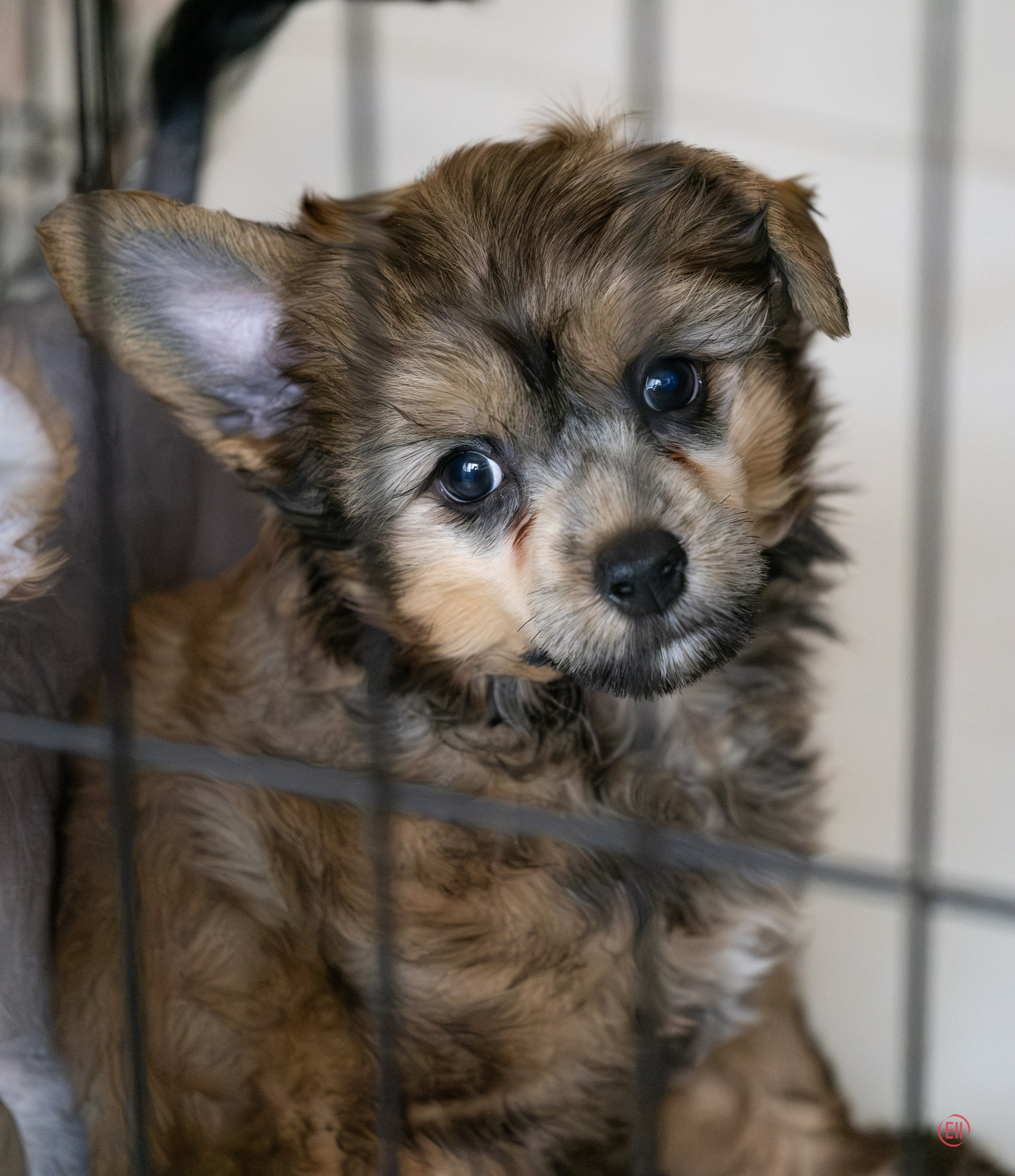
I’ve been studying the brain for decades, and what still amazes me is not our ability to solve complex equations, but what happens to the human brain when a dog enters the room. In that moment, our nervous system literally reorganizes itself: oxytocin levels rise, cortisol production drops, and heart rate evens out. And all of this is pure physiology, triggered in fractions of a second — before we even become aware of our affection for the animal.
Loving dogs is not a random preference or simply a matter of taste — it’s a reflection of our psychology, our attachment patterns, and the way we perceive those around us. If you genuinely love dogs, neuroscience can tell you far more about yourself than any questionnaire or psychological test.
Theory of Mind: What Dogs Have Learned from Us
We are deeply social beings, and our brain is evolutionarily wired for continuous, automatic reading of others' intentions and emotions. This capacity, known as theory of mind (or mentalization), allows us to understand that other people have their own inner world. Remarkably, over millennia of living side by side, dogs have become the only animals on the planet to master this skill at nearly a human level. A dog follows your gaze, responds to your tone of voice, and, as research shows, picks up on our emotional state remarkably well.
Research by Brian Hare at Duke University demonstrates that in recognizing human social signals, dogs outperform even chimpanzees — with whom we share 98% of our DNA. People who form deep bonds with dogs tend to have a high level of genuine empathy — which should not be confused with superficial sentimentality.
Empathy and Mirror Neurons
Empathy is the brain’s ability to literally model the inner state of another being, thanks to mirror neurons, discovered in the 1990s by Giacomo Rizzolatti’s team. However, for people with highly developed empathy, this gift often leads to exhaustion in large social groups, where they involuntarily absorb others' experiences. For them, a dog becomes the ideal recipient of empathy: it offers warmth without hidden motives, manipulation, or the need for complex interpretation.
Many empaths subjectively report that they feel calmer and more at ease around a dog than around people. Equally important is attachment theory, developed by psychologist John Bowlby in the mid-20th century. How significant adults responded to our needs in early childhood shapes our lifelong attachment pattern: secure, anxious, or avoidant. People with an anxious style, living in a background fear of rejection, find saving stability in a dog.
According to data from the journal Anthrozoös, such people often perceive dogs as full family members and grieve their loss more deeply than the loss of some people. And for those with an avoidant style, for whom human closeness feels potentially dangerous, a dog becomes the first experience in years of safe contact — where their vulnerability will never be used against them.
The Oxytocin Loop: A Gaze That Changes Biochemistry
The most powerful neurobiological confirmation of this unique interspecies bond came from a 2015 study (Nagasawa et al., Science), which showed that during prolonged eye contact between a human and a dog, both experience a synchronized release of oxytocin. This neuropeptide underlies trust and attachment, released, for example, between mother and child during breastfeeding. Neither wolves nor chimpanzees demonstrate a similar effect — it is the result of our shared millennia of evolution.
Earlier, in 2003, a study by Odendaal & Meintjes showed that positive human-dog interaction raises oxytocin levels in both, along with beta-endorphin, prolactin, and dopamine. But the “gaze loop” itself was the discovery of 2015.
Dogs and the Loneliness Epidemic
In an era of a global loneliness epidemic — which U.S. Surgeon General Vivek Murthy in 2023 compared in physiological harm to smoking 15 cigarettes a day — dogs literally save our lives. Dog owners tend to have lower blood pressure, lower cortisol levels, and higher heart rate variability, making their nervous system more resilient to stress.
We are prone to anthropomorphism — attributing human thoughts and emotions to animals. Thanks to MRI research by Gregory Berns at Emory University, we know that the limbic system of dogs does allow them to experience genuine joy, fear, and attachment. But by endowing dogs with complex feelings, we often project our own deficits onto them. Phrases like “she understands me” or “he will never betray me” are not just descriptions of a pet — they are a mirror of our own need for safety and unconditional acceptance. Nevertheless, a person capable of truly caring for a dog — with responsibility and a willingness to bear the pain of loss — already possesses a tremendous inner resource for love.
Who Dog People Are: A Personality Profile
Research by Samuel Gosling at the University of Texas at Austin confirms that dog owners have a distinct personality profile. On the “Big Five” scale, they demonstrate high agreeableness, warmth, and other-orientation. They also show a pronounced biophilia — an innate affinity for nature and living beings.
In Closing
A dog brings nothing into our lives that wasn’t already within us: it merely works as a key, unlocking our own neural circuits of care, empathy, and attachment. And if your dog is right next to you now, just look into its eyes a few seconds longer than usual — your brain already knows what to do next.
From around the web

Why it is important to get a puppy used to grooming procedures from an early age




HOORAY, we are Champions!!! 🏆

Nero (Ronik) of the Golden Dynasty, Nero, has passed away. The most beautiful boy in the world

Poale Ell Grace Junior Champion of Russia

“Mrs. Lakhta” of the Primorsky District of St. Petersburg

Grace at the exhibition in Zvenigorod